Australia has one of the world's highest rates of skin cancer. Our Mornington GPs perform thorough full body skin examinations with dermatoscopy to detect skin cancers early — when they're most treatable.
Bulk Billing available for eligible patients.
Open 7 Days · Mon–Fri 8am–8pm · Sat/Sun & PH 9am–4pm · (03) 5975 0000
Living on the beautiful Mornington Peninsula means a lifestyle filled with sun, surf and the outdoors — and that comes with elevated skin cancer risk. Australia records more than 15,000 new melanoma diagnoses each year, yet early-detected melanoma has a 90%+ survival rate.
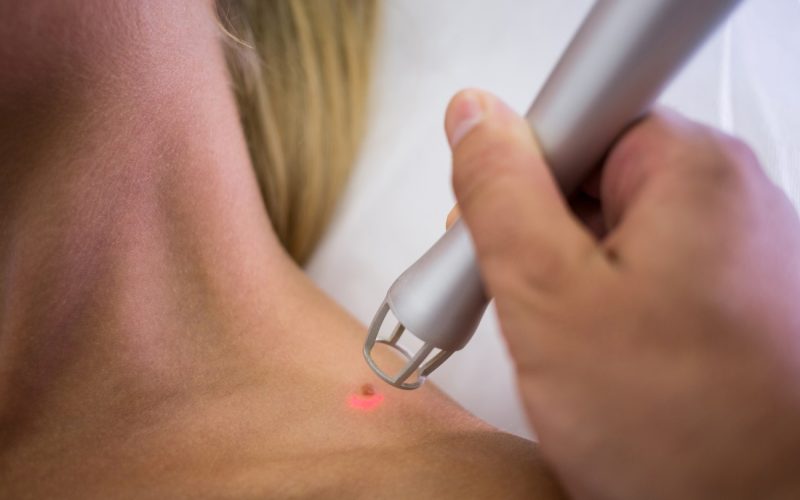
Our GPs use dermatoscopy — a specialised illuminated magnifying device — to examine moles and lesions in detail, significantly improving diagnostic accuracy. Suspicious lesions can be biopsied on-site, removing the need for multiple appointments.
The Mornington Peninsula's outdoor lifestyle — boating, surfing, gardening, bushwalking — means residents face particularly high UV exposure year-round. Australia's UV index regularly exceeds 3 (the threshold for skin damage) even on overcast days, making annual skin checks essential rather than optional. At Peninsula MDC Mornington, we combine clinical expertise with dermatoscopy technology and thorough whole-body examination to give you the best possible chance of catching skin cancer early, when treatment outcomes are best and intervention is least invasive.
A systematic head-to-toe examination of all skin surfaces, including areas not easily self-examined such as the scalp, back and between the toes.
Dermatoscopy uses polarised light to examine pigmented lesions at 10x magnification, allowing detection of features invisible to the naked eye.
Digital documentation of lesions for future comparison, enabling detection of changes over time that may indicate malignant transformation.
Suspicious lesions are biopsied at the clinic under local anaesthetic — providing a tissue sample for definitive laboratory diagnosis with minimal delay.
Benign but troublesome lesions such as solar keratoses, seborrhoeic keratoses and warts can be treated with liquid nitrogen cryotherapy at the same visit.
When a melanoma or high-risk lesion is confirmed, we coordinate rapid referral to a dermatologist or skin cancer surgeon for definitive treatment.
We understand the outdoor lifestyle of Mornington Peninsula residents and tailor our skin cancer advice to your specific exposure history.
Our GPs are trained in dermatoscopy, significantly reducing both false positives (unnecessary worry) and false negatives (missed cancers).
Biopsy results are communicated promptly and follow-up care is coordinated without delay — because speed matters in skin cancer management.
For most adults, we recommend a full body skin check every 12 months. Those with a history of skin cancer, fair skin or significant sun exposure should consider 6-monthly checks.
Dermatoscopy is the use of a handheld instrument that illuminates and magnifies skin lesions up to 10 times, enabling your GP to identify features that indicate whether a mole is benign or potentially malignant.
No — a skin examination is completely painless. If a biopsy is required, local anaesthetic is applied first, and most patients describe only minor discomfort.
Wear loose, easily removable clothing. Your GP will need to examine all skin surfaces. You'll be given a gown, and only the area being examined will be uncovered at any one time.
If your GP identifies a suspicious lesion, a biopsy may be taken during the same appointment. Results typically return within 1–2 weeks, and your GP will contact you to discuss findings and next steps.
Book online in seconds or call our friendly reception team. Same-day appointments available for urgent concerns.